

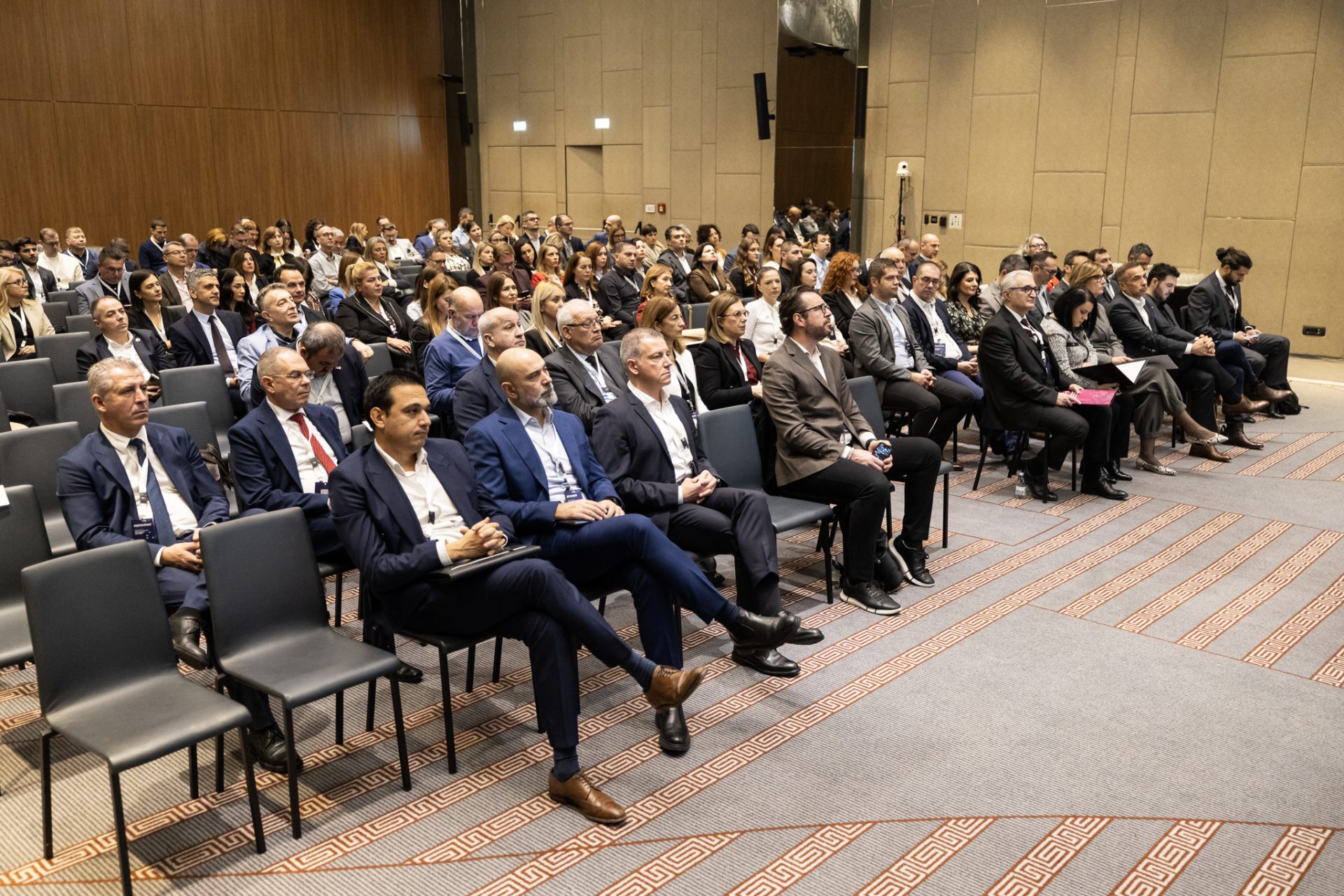
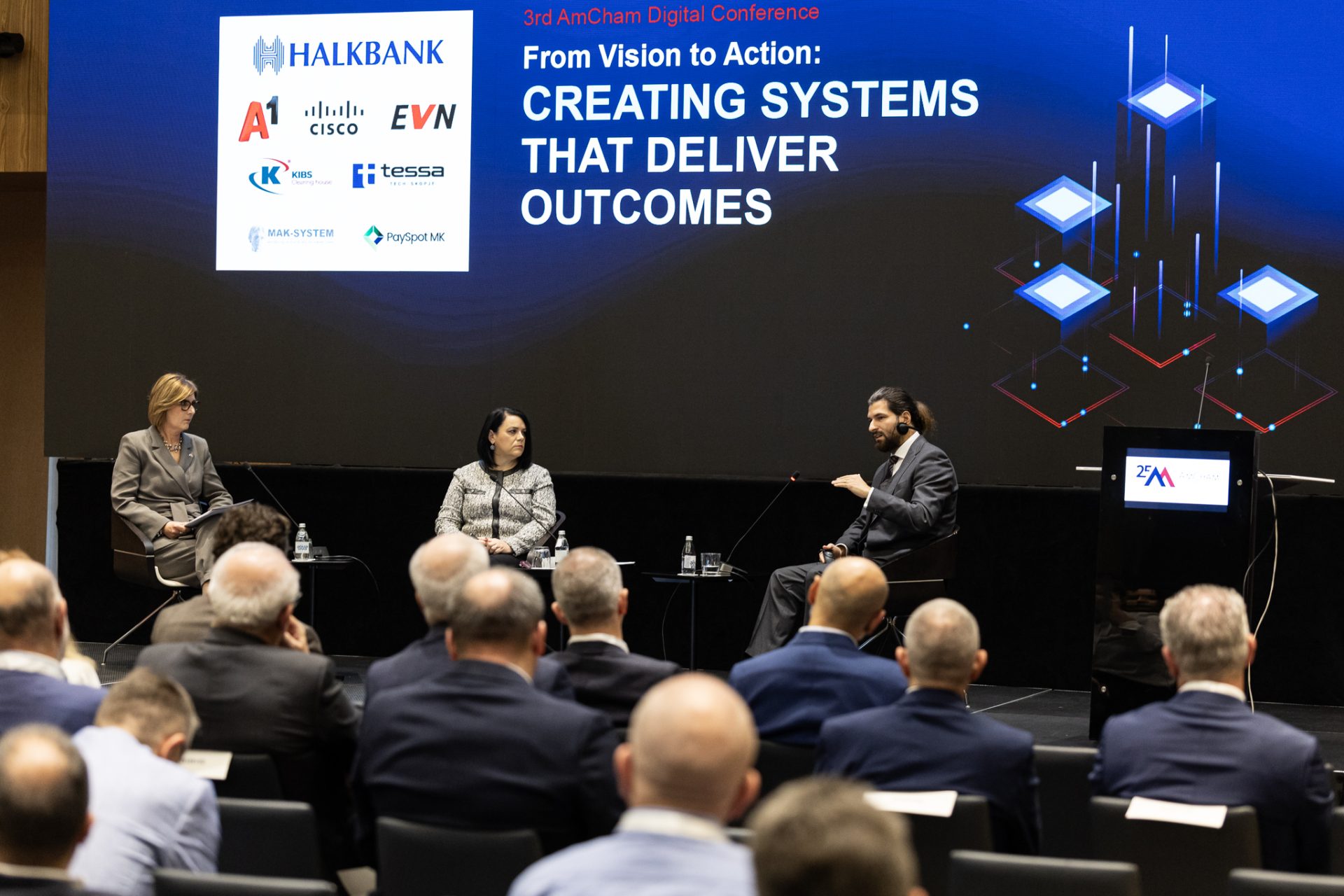
The 3rd Annual Digitalization Conference organized by AmCham was held in Skopje with the working title “From Vision to Action: Creating a System that Delivers”, emphasizing the need for a digital transformation that is practical, secure and functional.
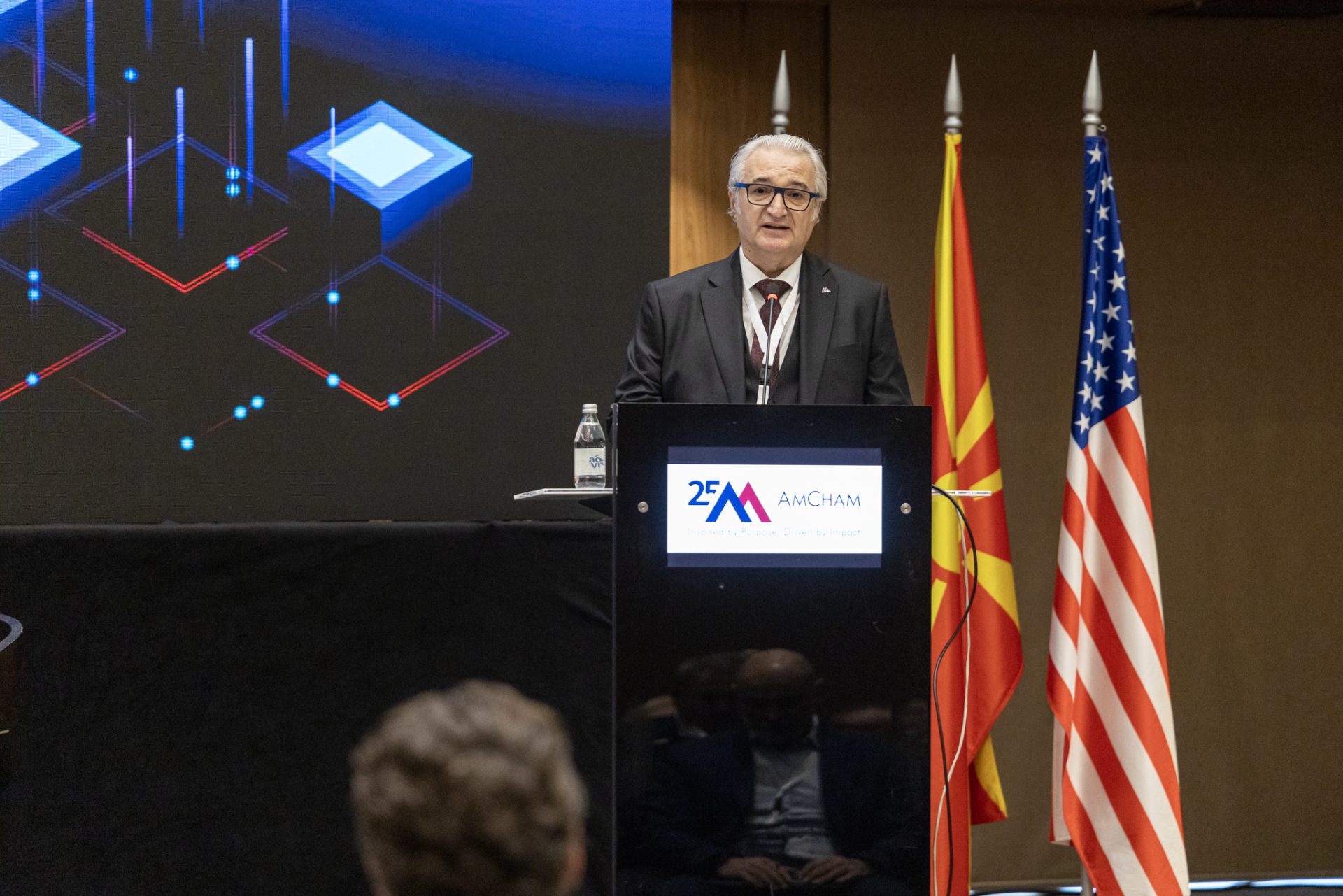
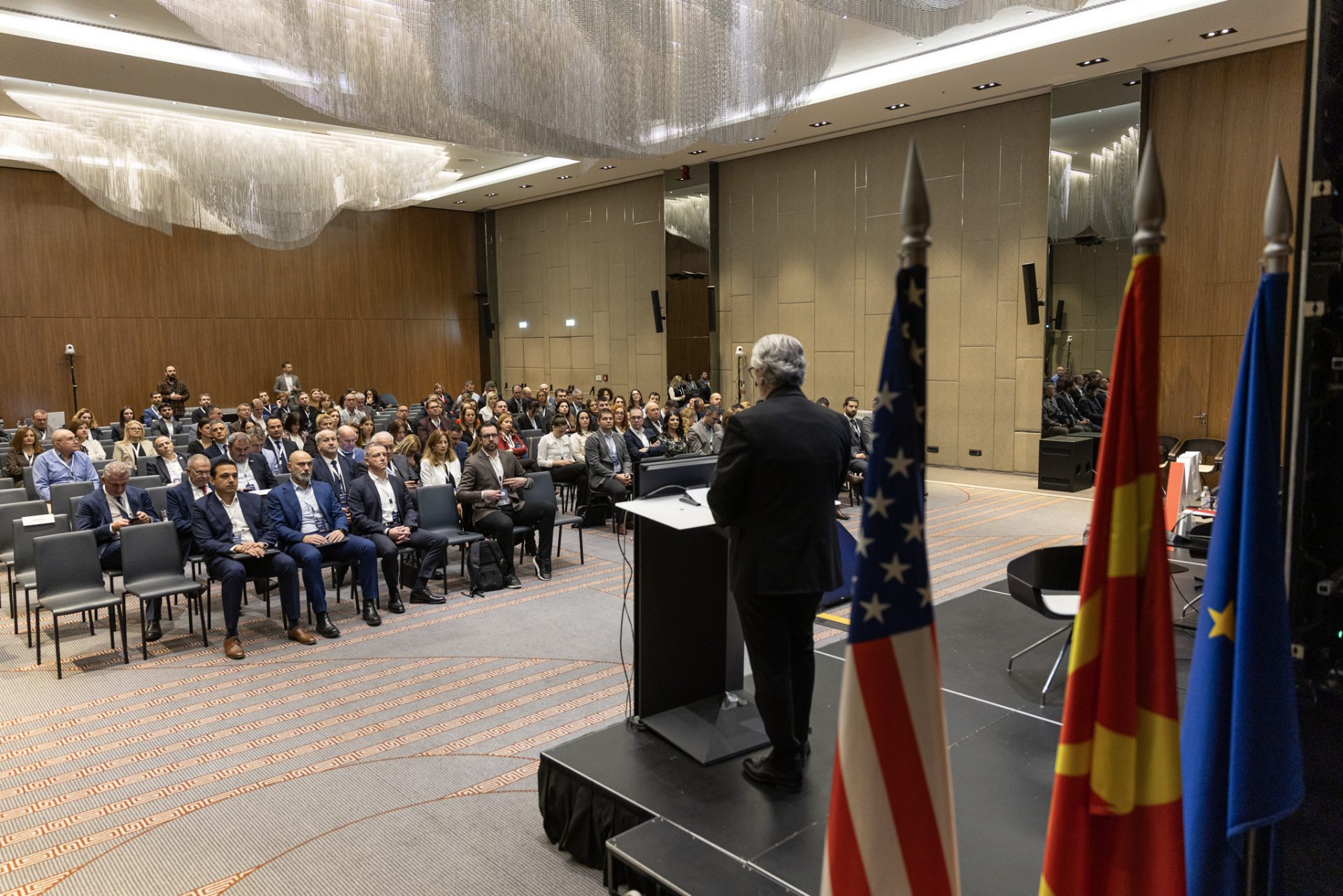
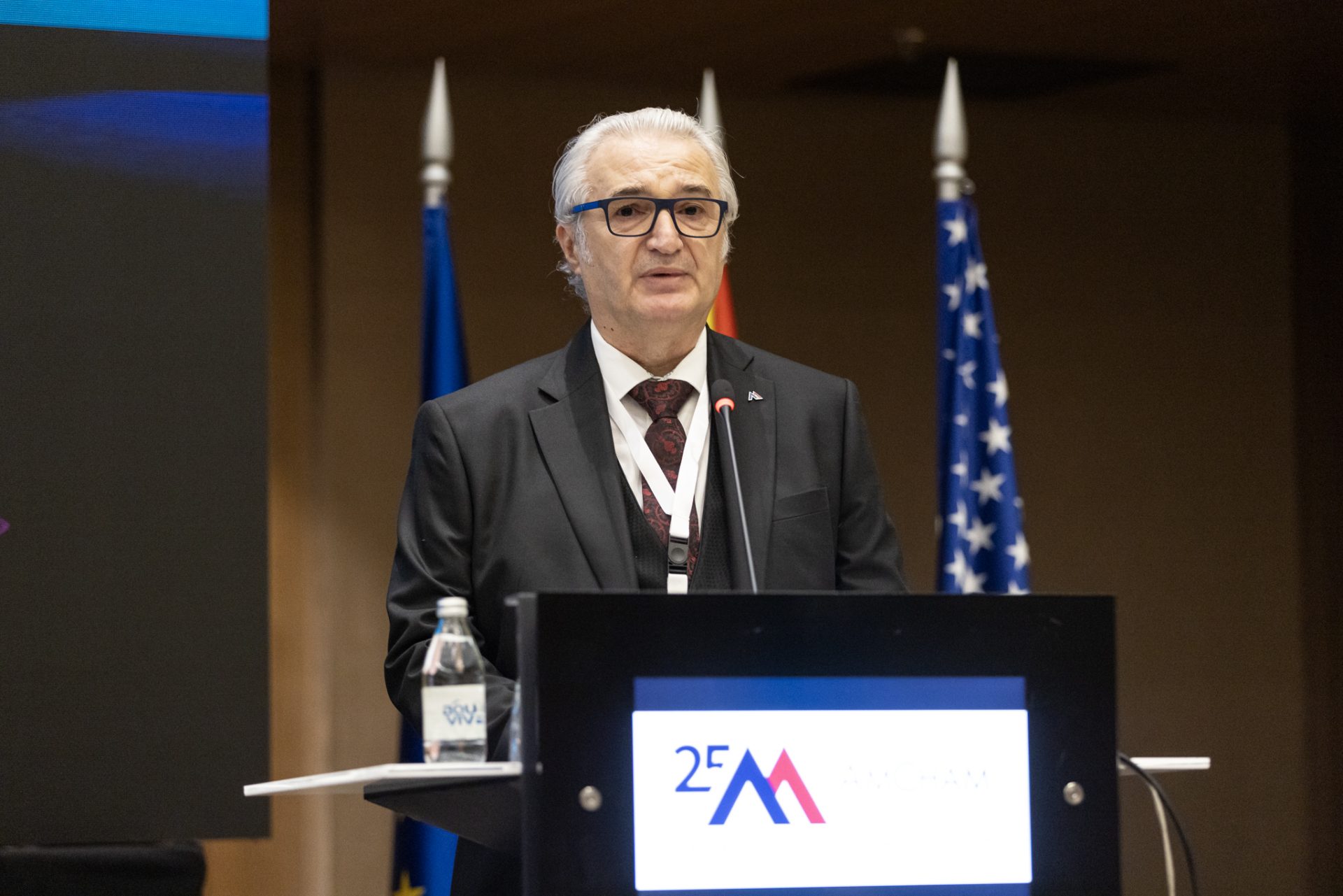
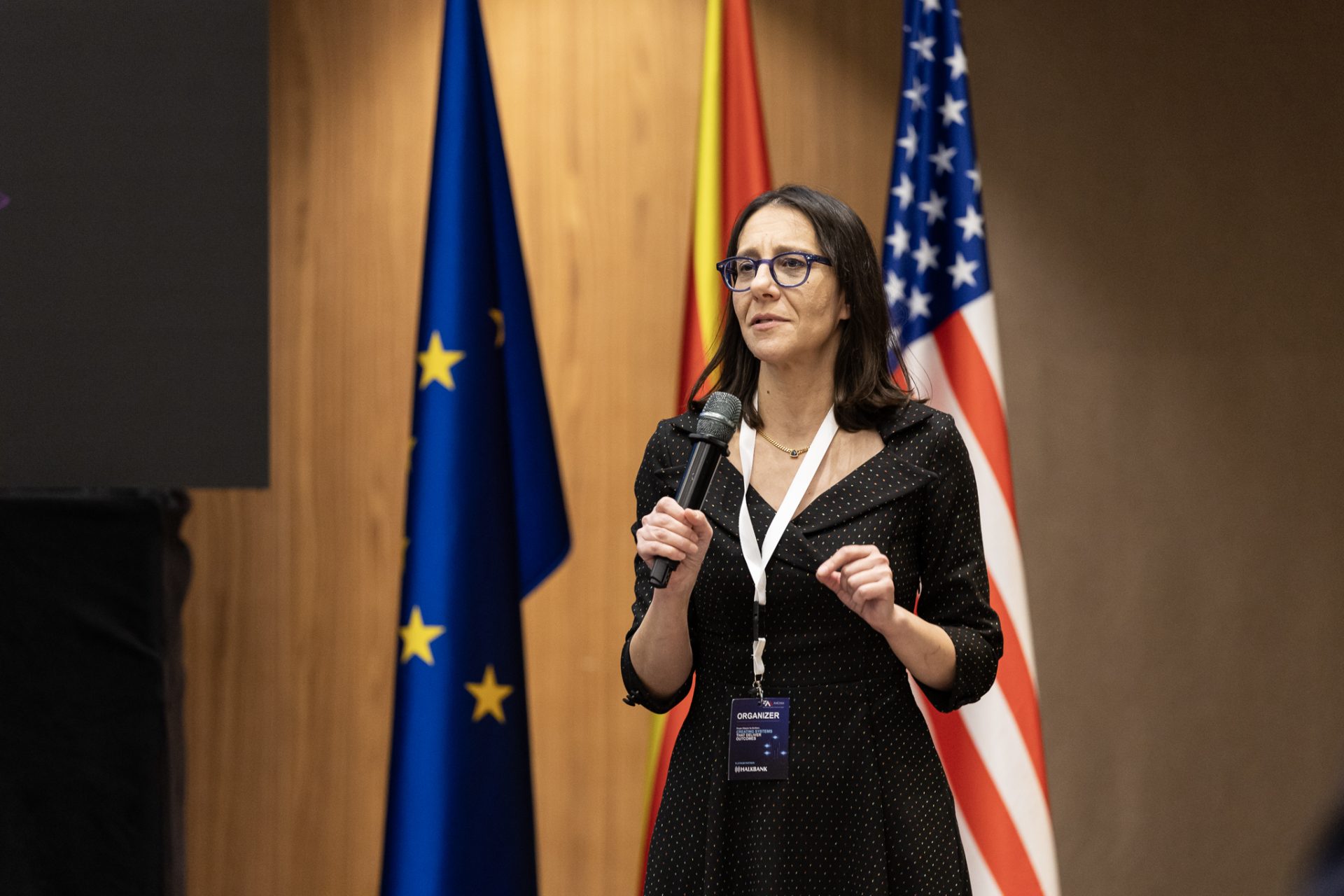
The conference was opened by Slavko Projkovski, a member of the AmCham Board of Directors, who also provided the framework for the conference itself, noting that although our lives start every morning in front of a screen, this does not mean that we are digitally advanced. Projkovski emphasized that true digitalization must not create “10 digital steps where there were 10 paper steps before”. It must eliminate bureaucracy, solve everyday problems, save time and build trust.
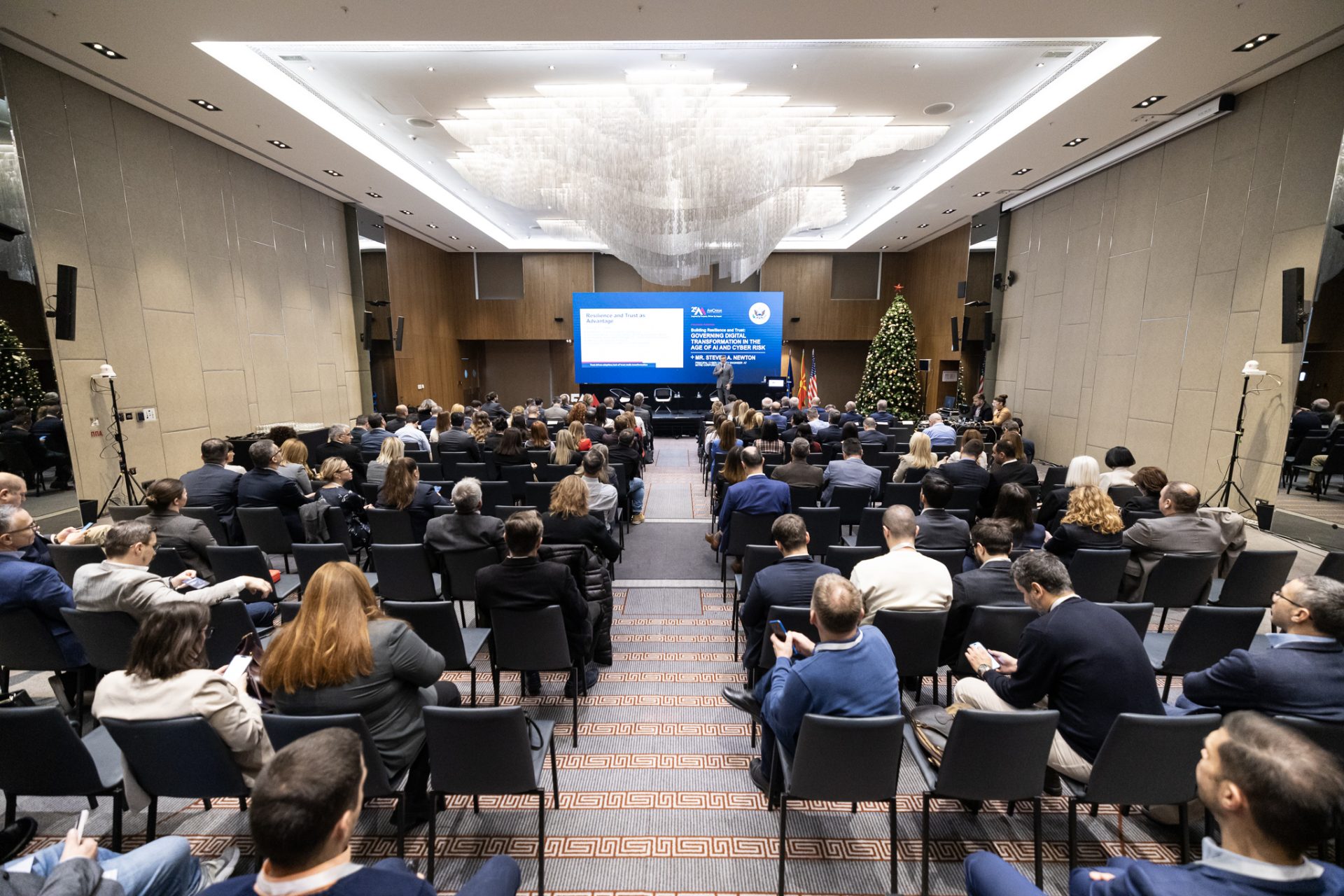
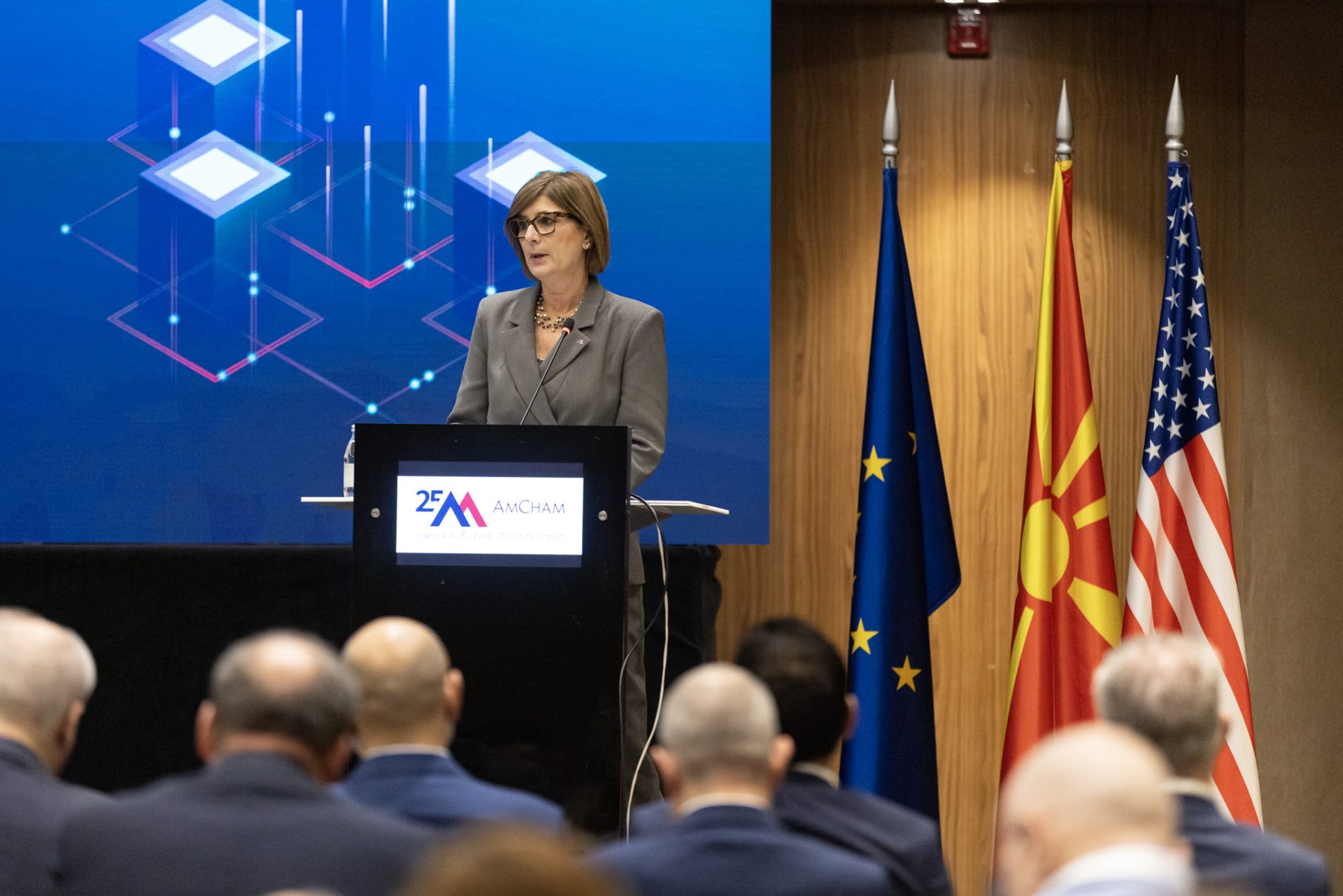
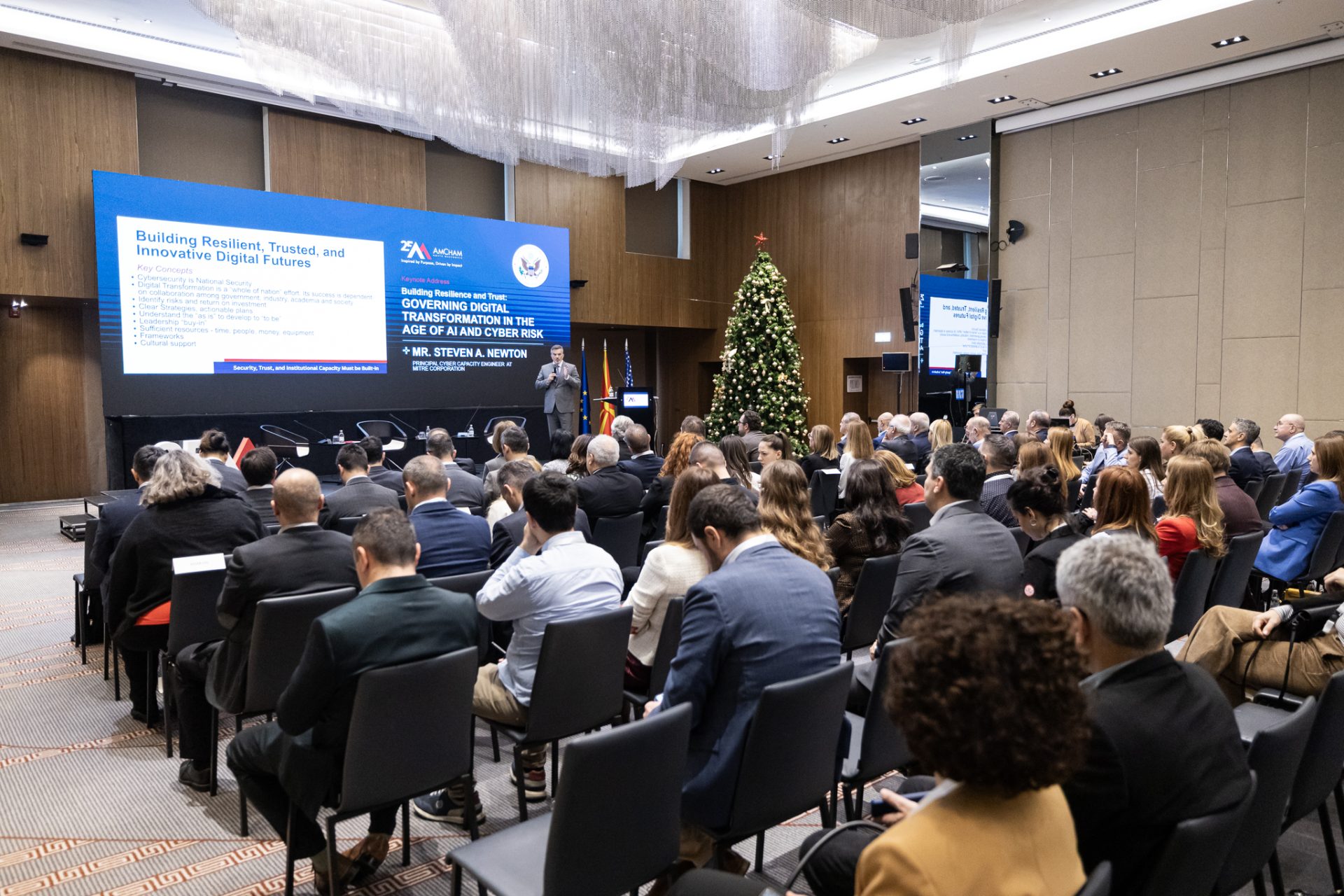
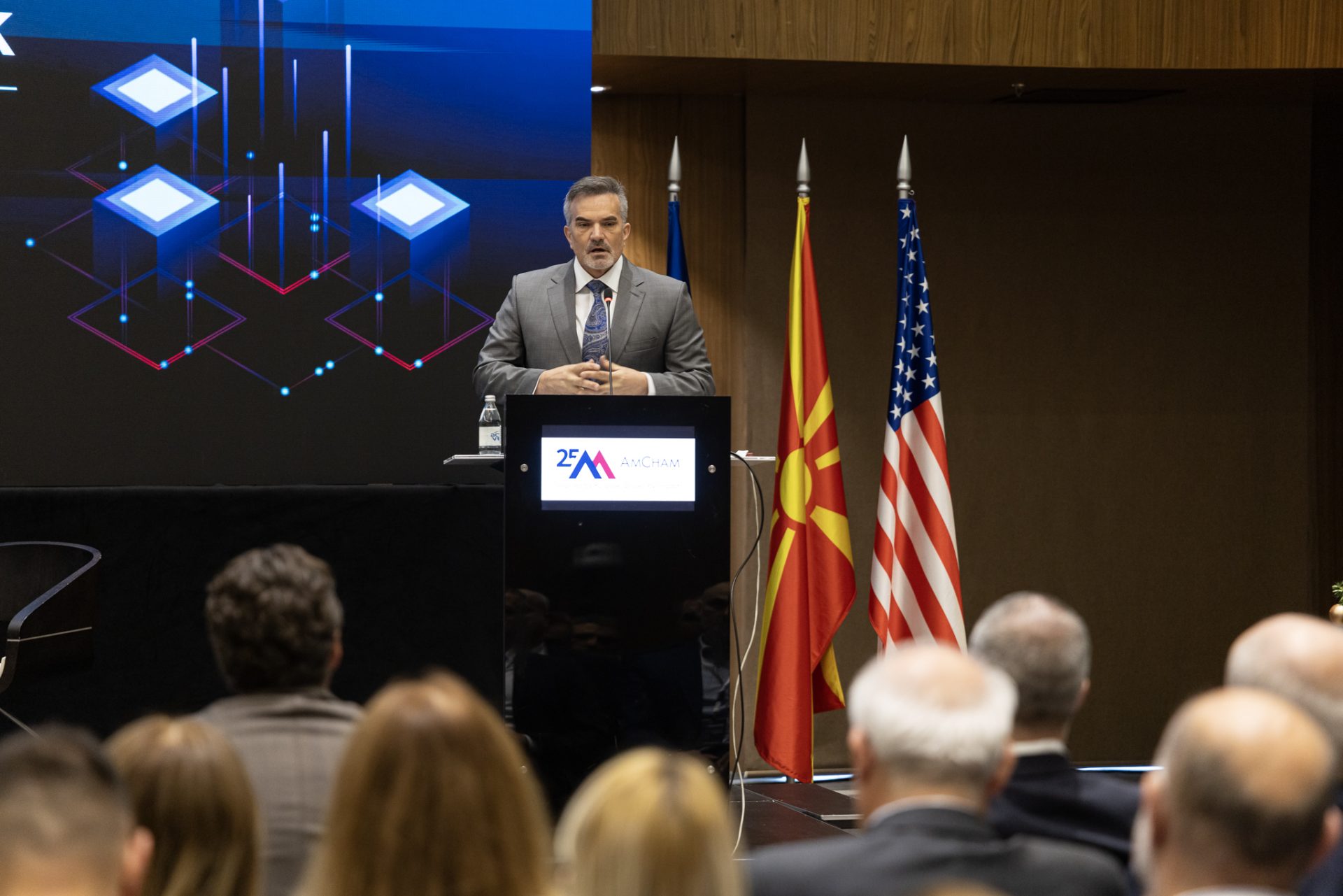
The messages from the introductory part were followed up by the presentation of the keynote speaker Stephen A. Newton from the MITRE Corporation, who emphasized that true digital transformation can only succeed if it is built on strong institutions, with clear governance rules and stable cybersecurity standards.
Newton warned that technology is advancing at a rapid pace, but institutional changes are much slower, so countries must develop the capacity to manage risks, coordinate between institutions and create reliable data systems. The speaker also pointed out that Macedonia has the opportunity to be an example of a country that successfully combines European and American digital standards – through transparent, interoperable and inclusive solutions that enable the safe use of new technologies, including artificial intelligence.
Continuing the agenda, five panel discussions covered the key priorities of the national digital agenda. The discussions brought together policymakers, regulators, business community representatives and technology companies, who, through their own perspectives, elaborated on the most important systemic reforms that should move the country forward towards digital maturity.
The first topic focused on the digital transformation of public revenue systems, where the Director of the Public Revenue Office, Elena Petrova, and the representative of PwC Hungary, Norbert Toth, spoke about the benefits of e-invoicing and real-time fiscalization, with practical examples and guidelines for future implementation.
Followed a panel discussion where the Minister of Digital Transformation Stefan Andonovski, together with Metodija Mirchev from A1 and Damjan Manchevski from MAK-SYSTEM, spoke about more agile interoperability within institutions and in relations with the business sector, as well as the need to implement the already adopted regulation and the existing digital infrastructure. The speakers also addressed the importance of clear standards, coordination and data protection in creating modern public services.
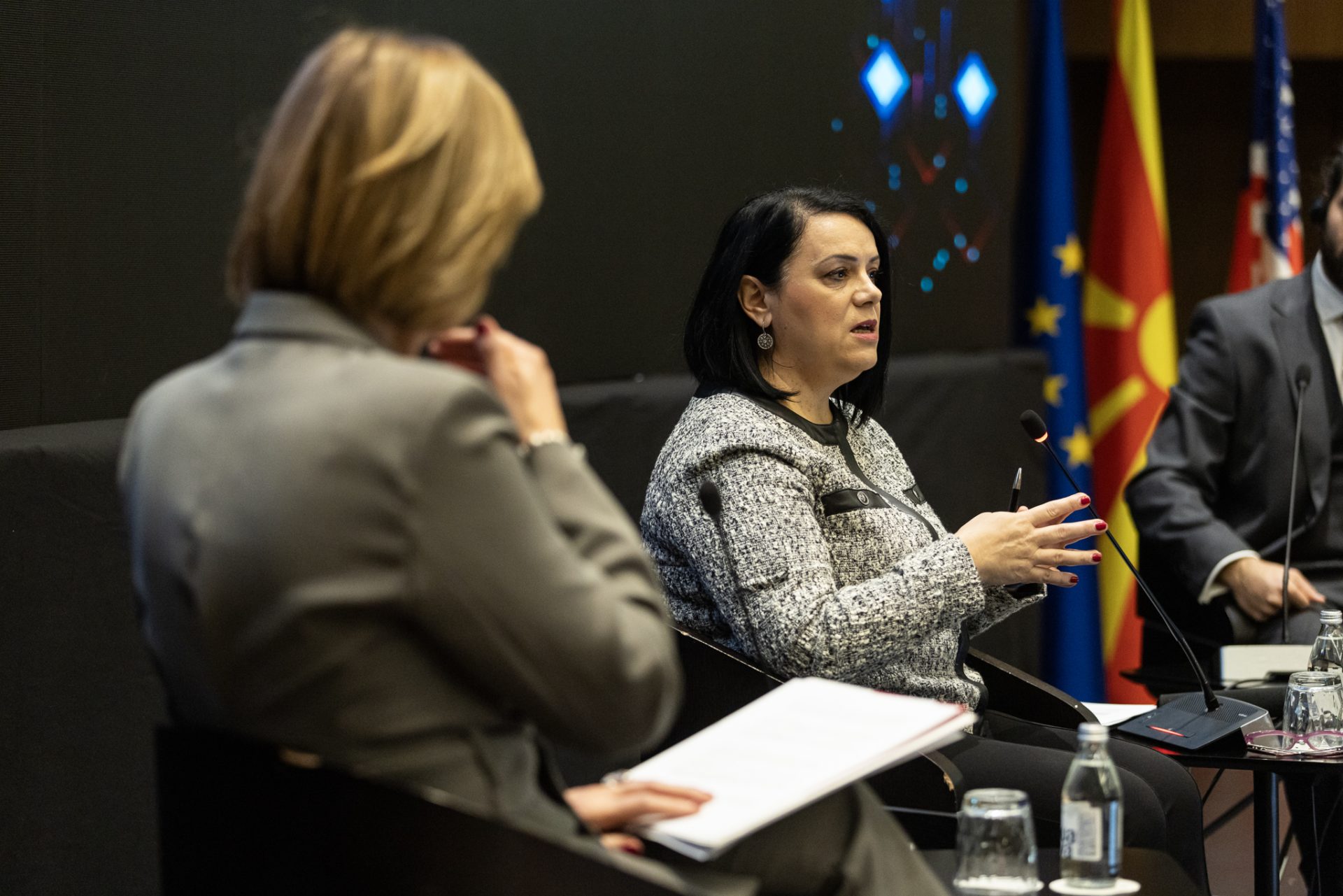

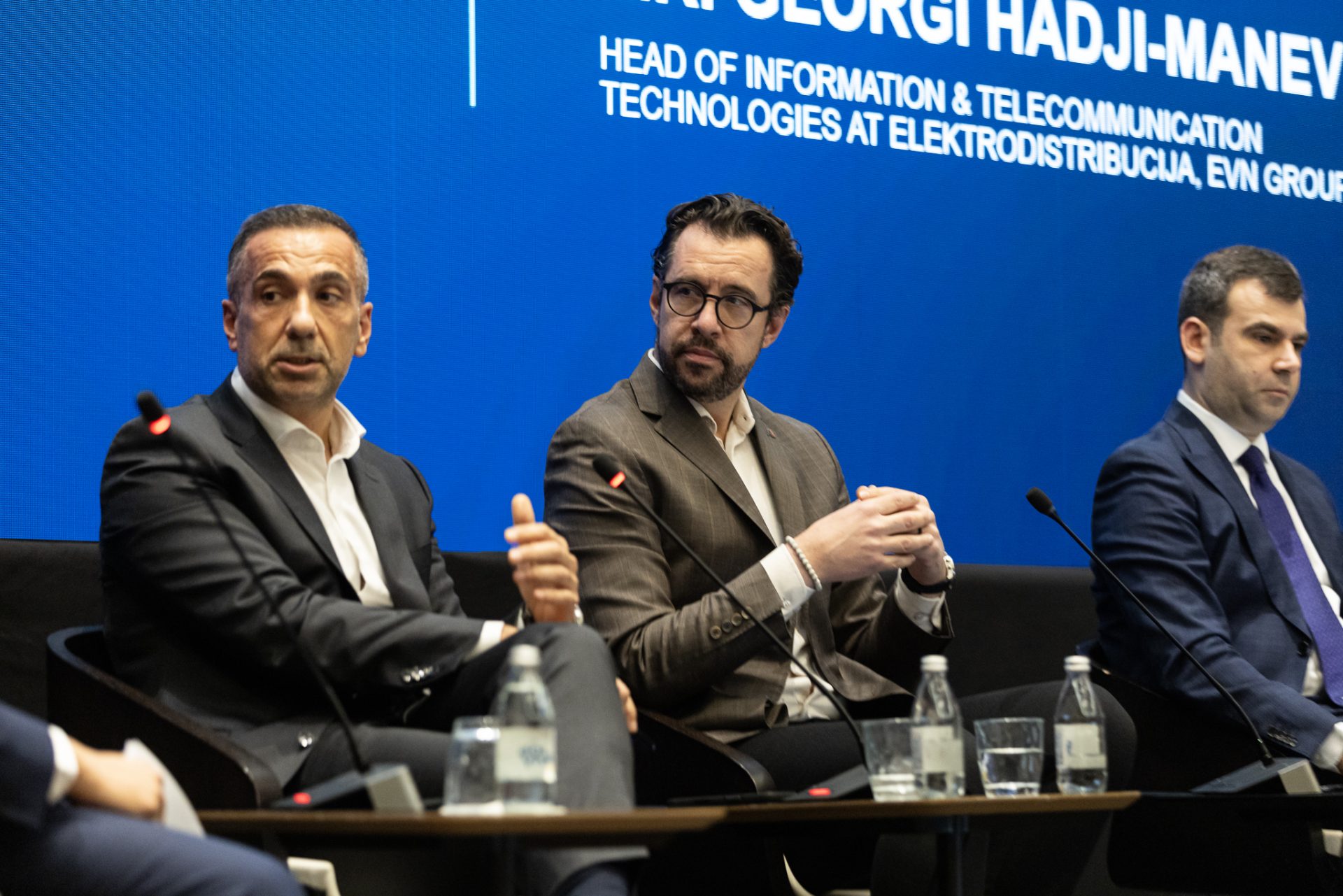
The discussion on digitalization and cybersecurity in the energy sector, led by the General Director of MEPSO, Burim Latifi, together with Apostolcho Ramov from ERC, Georgi Hadzi-Manev from EVN, Andrej Petreski from Cisco and Airi Shej from Tessa Group, attracted particular attention. The panelists raised important issues on network modernization, smart-grid solutions, digital monitoring and the challenges related to the new Energy Law, with a clear emphasis on cyber-protection of critical infrastructure.
The topic of the financial sector and digital innovations was addressed through the perspectives of representatives from key institutions: Biljana Donovska-Gecheva from the National Bank, Berkan Imeri from Halkbank, Sandra Tomanović from KIBS and Marin Piperkoski from PaySpot MK. They provided an overview of SEPA integration, the development of instant payments and the opening of the market for fintech solutions, as well as the alignment with European standards.
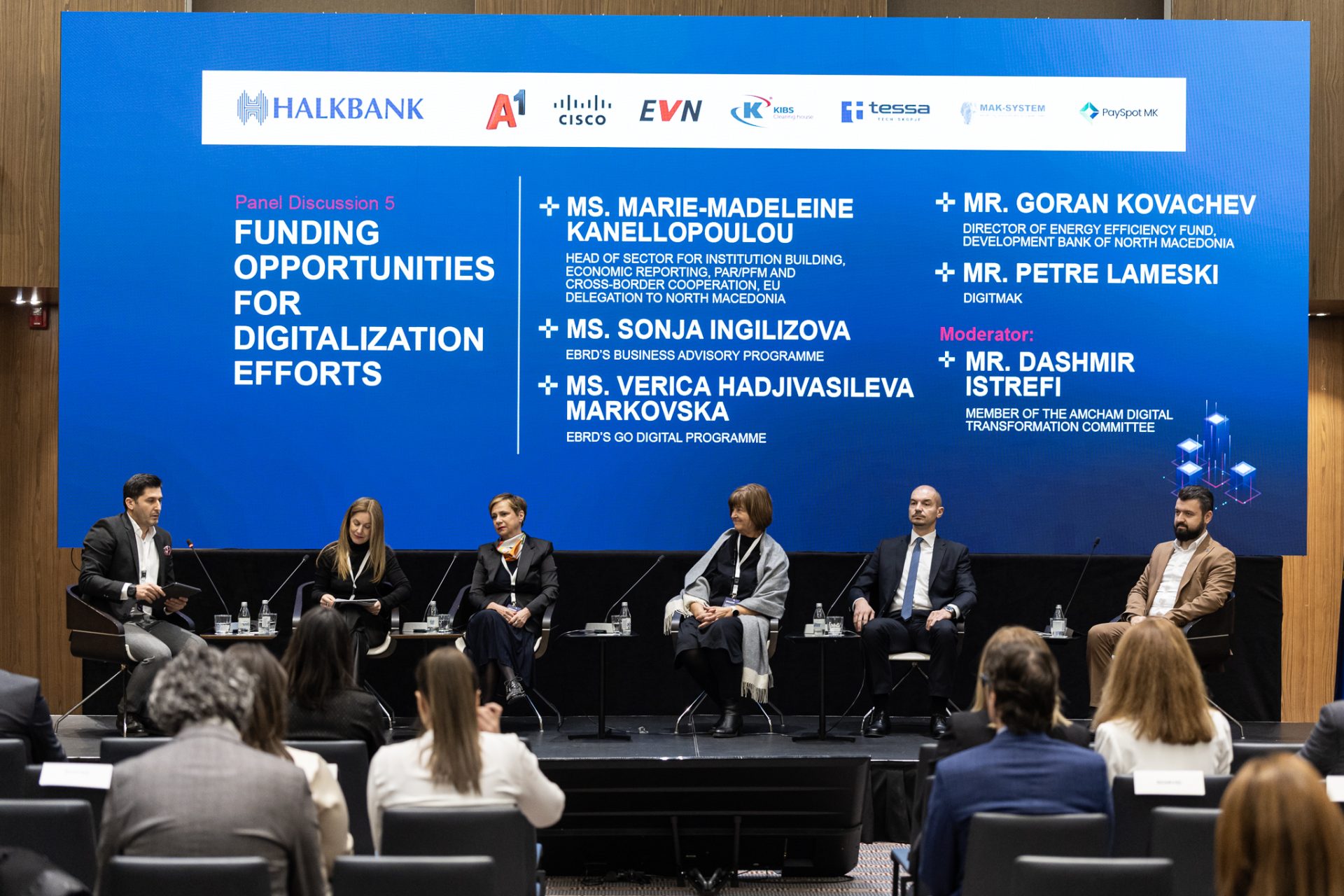
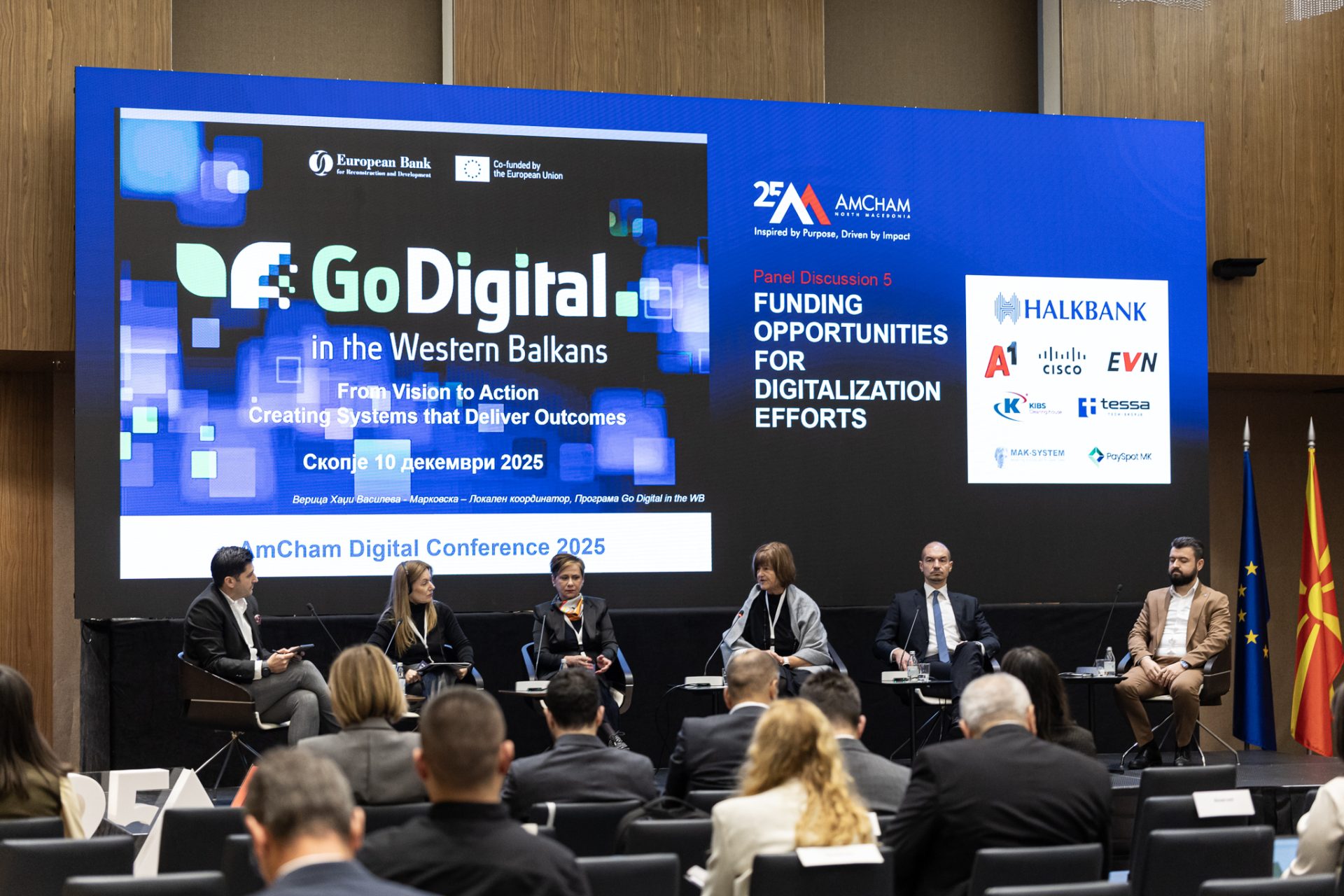
The conference ended with a panel focusing on ways to finance digitalization, where Sonja Ingilizova from the EBRD, Marie-Madeleine Kanellopoulos from the EU Delegation, Verica Hadživasileva Markovska from the Go Digital program, together with Goran Kovačev from the Development Bank and Petre Lameski from Digitmak, provided an overview of current and upcoming funds, grants and calls for support to public institutions and private companies.
With these topics, AmCham reinforced the message that our country has a real foundation for systemic digital change, but that the next phase requires partnerships, discipline, and practical implementation for digitalization to become an everyday reality that delivers results.































![Healthcare Academy for Journalists [Open Call]](https://amcham.mk/wp-content/uploads/2025/07/healthcare-hub-1.png)